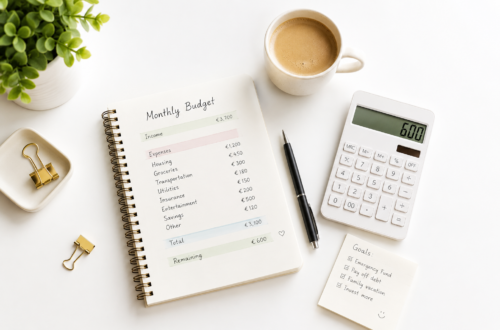
A Simple Budget That Helps You Take Control of Your Money
Creating a budget is one of the most important steps toward financial security, yet many people never get started because budgeting seems too complicated. Countless spreadsheets, budgeting apps, and financial advice videos make it appear as though managing money requires hours of work every month. Fortunately, that is not true. A good budget should make your financial life easier, not more stressful.
One of the most popular budgeting methods is the 50/30/20 rule. It has become widely known because it offers a simple framework that helps people divide their income into three easy categories without tracking every single purchase. While it is certainly not the perfect solution for every household, it provides an excellent starting point for anyone who wants to build healthier financial habits.
In this guide, you’ll learn exactly how the 50/30/20 rule works, what belongs in each category, when it works well, when it needs to be adjusted, and how you can use it to support your own financial goals.
What Is the 50/30/20 Rule?
The 50/30/20 rule divides your monthly after-tax income into three major categories. Instead of assigning every euro to a detailed budget, you simply focus on balancing your overall spending.
The recommended allocation looks like this:
- 50% for needs
- 30% for wants
- 20% for savings and financial goals
Imagine you bring home €3,000 each month after taxes. According to the rule, you would aim to spend around €1,500 on essential expenses, €900 on discretionary spending, and €600 on building your financial future.
The exact numbers are not what makes this budgeting method effective. Its greatest strength is providing a clear structure that helps you become more intentional with your money without feeling overwhelmed.
What Counts as Needs?
The first category includes expenses that are necessary to maintain your everyday life. These are the bills you cannot realistically avoid without making significant changes to your lifestyle.
Housing costs such as rent or mortgage payments belong here, as do utility bills, groceries, health insurance, transportation needed for work, minimum debt payments, and other essential living expenses.
Many people accidentally classify almost everything as a need, which defeats the purpose of the budget. Owning a mobile phone may be necessary, but choosing the latest flagship model usually is not. Internet access may be essential for work, while paying for the fastest premium package often remains a personal choice.
A simple question can help whenever you are unsure. If you stopped paying for this expense tomorrow, would your basic daily life become impossible? If the answer is yes, it probably belongs in the needs category.
What Counts as Wants?
The wants category covers the things that make life more enjoyable but are not essential for survival or work. This part of the budget is often misunderstood because some people assume they should eliminate these expenses completely.
That is not the purpose of the 50/30/20 rule.
Enjoying your money is an important part of maintaining a healthy financial life. Eating at restaurants, streaming movies, buying new clothes, travelling, attending concerts, upgrading your gaming setup, or pursuing hobbies all belong in this category. None of these purchases are inherently good or bad. The goal is simply to ensure that they remain balanced with your essential expenses and long-term savings.
Allowing yourself room for enjoyment also makes your budget much easier to follow over many years. A financial plan that removes everything you enjoy is unlikely to survive the first unexpected temptation.
What Counts as Savings?
The final twenty percent is dedicated to improving your future financial situation. Many people assume this category only includes transferring money into a savings account, but it is actually much broader.
Building an emergency fund belongs here because it protects you from unexpected expenses without forcing you into debt. Investing in diversified index funds or ETFs also fits naturally into this category because it helps grow your wealth over the long term. Contributions to retirement accounts, saving for a home, building an education fund for your children, or making additional payments toward high-interest debt all move you closer to financial security.
One important point is often overlooked. Paying more than the required minimum toward expensive debt can produce returns that rival many investments because every euro of interest you avoid remains in your pocket. For someone paying double-digit interest rates, reducing debt may be the best financial investment available.
A Practical Example

Let’s see how the rule could work in practice.
Suppose your monthly take-home pay is €3,500.
Your budget could look something like this.
| Category | Amount |
|---|---|
| Needs | €1,750 |
| Wants | €1,050 |
| Savings & Investing | €700 |
Within the needs category, you might pay rent, groceries, insurance, utilities, and transportation costs. Your wants could include dining out, holidays, entertainment, new electronics, or hobbies. The remaining €700 could be invested in ETFs, added to your emergency fund, or used to repay debt faster.
Although your personal numbers will almost certainly differ, the example demonstrates how quickly you can build a simple financial plan without creating dozens of spending categories.
Use Our 50/30/20 Budget Calculator
Calculating your own budget does not have to involve a spreadsheet.
Simply enter your monthly after-tax income into our 50/30/20 Budget Calculator, and it will instantly show how much money would be allocated to each category. You can then compare those suggested amounts with your current spending and immediately see whether your finances are roughly balanced or whether one area deserves more attention.
If your actual spending differs significantly from the suggested percentages, do not panic. The calculator is designed to help you understand your finances, not to judge them.
50/30/20 Budget Calculator
| Needs (50%) | €0.00 |
| Wants (30%) | €0.00 |
| Savings & Investing (20%) | €0.00 |
The 50/30/20 rule is a guideline, not a strict requirement. Adjust the percentages if your personal situation requires a different balance.
Why the 50/30/20 Rule Works
One reason this budgeting method has remained popular for years is its simplicity. Instead of worrying about every coffee or supermarket receipt, you focus on the bigger picture. That makes budgeting feel far less restrictive while still encouraging responsible financial decisions.
The rule also encourages consistent saving from the beginning. Many people wait until the end of the month to see whether any money remains, only to discover that nothing is left. By treating savings as one of the three main categories, you begin paying your future self first instead of hoping something remains after all other expenses.
Another advantage is flexibility. Small spending decisions no longer require constant analysis because your overall financial balance matters much more than individual purchases.
When the Rule Doesn't Work Perfectly
Although the 50/30/20 rule is an excellent starting point, it should never be treated as an unbreakable law.
Housing costs have increased dramatically in many cities around the world. Some families already spend more than fifty percent of their income on rent or mortgage payments before paying a single utility bill. In those situations, following the rule exactly may simply be impossible.
People with lower incomes often face a similar challenge. When essential expenses consume most of the monthly budget, saving twenty percent may not be realistic. That does not mean budgeting has failed. Saving five or ten percent consistently still represents meaningful financial progress.
On the other hand, some people intentionally save far more than twenty percent because they want to achieve financial independence earlier in life. Their budget might resemble a 50/10/40 or even a 40/20/40 split. Those percentages are perfectly reasonable if they match personal goals and remain sustainable over many years.
The percentages should support your financial journey rather than limit it.
Common Mistakes
One of the biggest mistakes is quietly moving discretionary purchases into the needs category. Premium subscriptions, luxury cars, expensive smartphones, and frequent restaurant visits gradually become "essential" simply because they have become part of everyday life.
Another common mistake is focusing only on monthly spending while ignoring irregular expenses. Annual insurance premiums, vehicle maintenance, Christmas gifts, and home repairs eventually arrive whether you prepare for them or not. Setting aside small amounts throughout the year makes these expenses much easier to manage.
Many people also create a budget once and never look at it again. Income changes, children grow older, housing costs increase, and priorities evolve over time. Reviewing your budget every few months ensures that it continues to reflect your current situation rather than your life from several years ago.
Should You Follow the Rule Exactly?
Probably not.
The greatest value of the 50/30/20 rule lies in providing direction rather than perfection. If your current budget is close to those percentages, you are already building a balanced financial foundation. If your circumstances require different numbers, there is nothing wrong with adapting the framework.
A budget should reflect your life instead of forcing your life to match an arbitrary formula. Some months you may spend more on essential expenses, while other months allow you to invest a much larger share of your income. Consistency over many years matters far more than reaching an exact percentage every single month.
How This Fits Into the Financial Ladder
The 50/30/20 rule fits naturally into Step Zero of the Financial Ladder. Before you can save consistently, invest confidently, or work toward financial independence, you first need a clear understanding of where your money goes every month.
A simple budget creates that awareness without adding unnecessary complexity. Once your spending aligns with your priorities, every later step becomes significantly easier because you are making financial decisions intentionally rather than reacting to each month's bank balance.
Final Thoughts
The 50/30/20 rule has remained popular because it solves the biggest problem most people face when they begin budgeting. It replaces confusion with a simple framework that anyone can understand within a few minutes.
You should never feel discouraged if your current spending does not perfectly match the suggested percentages. Every household faces different circumstances, different income levels, and different financial goals. The purpose of the rule is not to create perfect budgets but to encourage better decisions over time.
If you have never created a budget before, the 50/30/20 rule is an excellent place to start. Use our calculator to see how your income could be divided, compare the results with your current spending, and make gradual improvements whenever possible. Small adjustments repeated month after month often produce far greater results than dramatic changes that only last a few weeks.
Disclaimer
The information in this article is for educational purposes only and does not constitute financial advice. Always do your own research or consult a qualified financial advisor before making investment decisions. Past performance does not guarantee future results, and all investments carry risk, including the potential loss of capital.