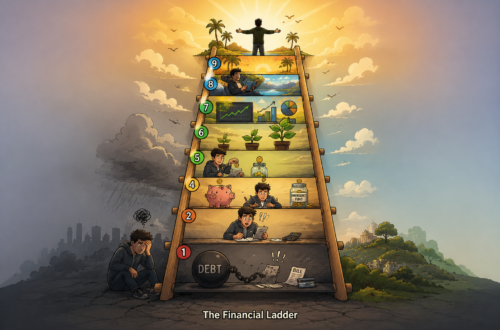
When Your Expenses Are Higher Than Your Income
Financial stability is the first real milestone on the Financial Ladder. If you consistently spend more than you earn, building savings or investing has to wait. Every month ends with less money than the month before, and over time that gap often turns into growing debt.
Reaching Step One doesn’t mean you’ve failed. Financial difficulties can arise for many different reasons, including unexpected expenses, job loss, rising living costs or simply a lack of financial planning. What matters now is not how you got here, but how you move forward.
The goal of this step is straightforward: create a situation where your income is higher than your expenses. Once you achieve that, you have built the foundation for every step that follows.
Close the Financial Gap
The biggest challenge at this stage is the difference between what you earn and what you spend.
If your monthly expenses exceed your income, that shortfall has to be financed somehow. Savings eventually run out, while credit cards and loans create an additional burden through interest payments. The longer this continues, the more difficult it becomes to regain control.
Before thinking about investing or long-term financial goals, focus on restoring balance. Even relatively small improvements can make a noticeable difference over time.
Review Your Spending
The easiest place to start is often your monthly expenses.
Go through your bank statements and identify every recurring payment. Separate essential expenses from those that could be reduced or paused for a while.
Ask yourself a few simple questions:
- Do I really use every subscription I pay for?
- Can I cook at home more often instead of eating out?
- Are there purchases I could postpone until my finances improve?
- Could I reduce housing, transportation or utility costs?
The goal isn’t to eliminate everything you enjoy. It’s to create enough financial breathing room to stop moving backwards.
Avoid Taking On New Debt
When money is tight, using a credit card can feel like a temporary solution. In reality, it often postpones today’s problem while making tomorrow’s even more expensive.
Whenever possible, avoid financing everyday expenses with new debt. Every additional balance increases future monthly payments and makes it harder to regain financial stability.
If you already have debt, focus first on preventing it from growing further.
Look for Ways to Increase Your Income
Reducing expenses is only one side of the equation.
Depending on your situation, increasing your income may have an even greater impact. This could mean working additional hours, taking on freelance work, developing new skills, changing jobs or creating another source of income.
Even a modest increase, combined with lower spending, can completely change your monthly cash flow.
Small Changes Add Up
Financial progress rarely comes from one dramatic decision. More often, it is the result of several smaller improvements that work together.
Cancelling subscriptions, reducing unnecessary spending, negotiating lower bills or earning a little extra each month may not seem life-changing on their own. Combined, however, they can turn a monthly deficit into a monthly surplus.
Once your income consistently exceeds your expenses, you have achieved something important: you are no longer falling behind.
Looking Ahead
Creating financial stability is one of the most important milestones on the Financial Ladder. Once your income consistently exceeds your expenses, you have stopped moving backwards and can finally begin making real progress.
Every positive month strengthens your financial foundation and brings you closer to your long-term goals.
You’ve completed Step One.
Your next milestone on the Financial Ladder is Step Two: Paying Back Your Debt, where you’ll learn how to reduce your debt efficiently and free up more of your income for your own future instead of interest payments.
Disclaimer:
This blog is for informational purposes only and should not be your sole guide for financial decisions. Always consult with a qualified financial professional before making major financial commitments.