Turning Financial Stability into Real Progress
Reaching Step Two means you’ve achieved something important. Your income is now higher than your expenses, and for the first time, you have money left at the end of the month.
Instead of using that surplus for additional spending, this stage focuses on one clear objective: reducing your debt.
Every payment you make lowers future interest costs and brings you one step closer to complete financial control. Although debt repayment often feels slow, each balance that disappears improves your financial flexibility and frees up money for future goals.
Know Exactly What You Owe
Before creating a repayment plan, take a complete inventory of your debts.
For each loan or credit card, write down:
- The remaining balance
- The interest rate
- The minimum monthly payment
Having all of this information in one place makes it much easier to decide where your money will have the greatest impact.
Focus on High-Interest Debt
Not every debt costs the same.
High-interest credit cards often become the biggest obstacle because they continue to generate interest month after month. The longer these balances remain unpaid, the more expensive they become.
For that reason, many people choose to direct every extra dollar toward their highest-interest debt while continuing to make the required minimum payments on all remaining loans.
Others prefer eliminating smaller balances first to build motivation through quick successes. Both approaches can work. The most important factor is choosing a strategy you can follow consistently.
Put Every Extra Dollar to Work
Debt repayment doesn’t have to rely only on your regular monthly budget.
Unexpected income can significantly speed up your progress. Tax refunds, work bonuses, overtime, gifts or money from selling unused belongings all create opportunities to reduce debt faster.
Rather than treating these payments as extra spending money, consider using them to shorten your repayment journey.
Even occasional additional payments can reduce interest costs and help you become debt-free sooner.
Stay Consistent
Paying back debt is rarely exciting, but consistency produces remarkable results over time.
Some months will bring visible progress, while others may feel slower than expected. Don’t let that discourage you. Every payment reduces your debt, even if the change isn’t immediately obvious.
Tracking your balances regularly can help maintain motivation and remind you how far you’ve already come.
Don’t Forget Personal Loans
If friends or family have helped you financially, those loans deserve attention as well.
Although they often carry little or no interest, they are built on trust. Keeping the people who supported you informed about your repayment plans helps maintain strong relationships while you continue working toward your financial goals.
Looking Ahead
Eventually, something changes.
Your debts become smaller, interest payments decline and the money that once disappeared into monthly repayments becomes available for something new.
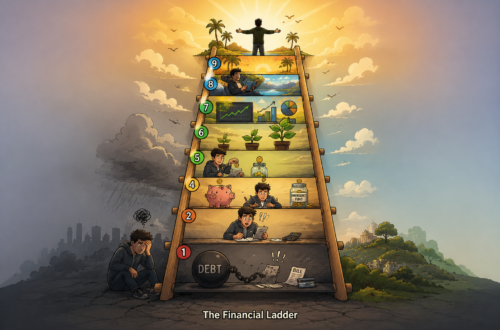
That is the moment the Financial Ladder changes direction once again.
Instead of paying creditors, you’ll begin building your own financial security.
You’ve completed Step Two.
Your next milestone on the Financial Ladder is Step Three: Building Your Safety Net, where you’ll learn why an emergency fund protects not only your finances but also every investment decision you’ll make later.
Disclaimer
This blog is for informational purposes only and should not be your sole guide for financial decisions. Always consult with a qualified financial professional before making major financial commitments.