Creating Financial Security
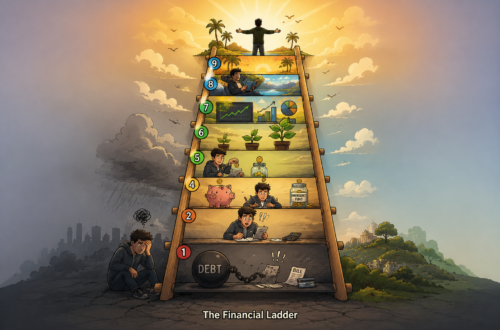
Reaching Step Three marks another important milestone on the Financial Ladder. Your finances are stable, your debt is under control, and for the first time, your money can begin working for your future instead of your past.
The focus now shifts from debt repayment to building financial security.
Before investing or pursuing long-term financial goals, it helps to have a solid safety net. Savings provide stability and allow you to deal with unexpected expenses without relying on loans or credit cards.
Why Saving Comes Before Investing
Many people want to start investing as soon as they become debt-free. While that enthusiasm is understandable, investing works best when it is built on a strong financial foundation.
Without savings, an unexpected expense can force you to sell investments at the wrong time or take on new debt just to cover everyday costs.
A financial safety net gives you flexibility. It allows you to deal with life’s surprises while keeping your long-term plans on track.
Build an Emergency Fund
One of the main goals of this step is creating an emergency fund.
This money is reserved for genuine emergencies, such as unexpected medical expenses, urgent home repairs, vehicle breakdowns or temporary loss of income. It should not be used for holidays, shopping or other planned purchases.
Many financial experts recommend building an emergency fund that covers between three and six months of essential living expenses. The exact amount depends on your personal situation, but the habit of saving consistently is far more important than reaching a specific number quickly.
Give Your Savings a Purpose
Saving becomes much easier when every dollar has a clear job.
Rather than keeping all of your money in a single account, consider separating different financial goals. An emergency fund, savings for unexpected expenses, future investments or larger personal goals can each have their own purpose.
This simple approach makes it easier to stay organised and reduces the temptation to spend money that was meant for something else.
Pay Yourself First
One of the most effective financial habits is surprisingly simple.
Instead of saving whatever happens to be left at the end of the month, move money into savings shortly after receiving your income.
Automating this process removes much of the decision-making and helps saving become part of your routine rather than something you have to remember every month.
Over time, consistency matters far more than occasional large deposits.
Confidence Through Preparation
One of the greatest benefits of saving isn’t the money itself.
It is the confidence that comes from knowing you are prepared for unexpected situations.
A broken washing machine, a medical bill or temporary unemployment no longer have to become financial emergencies. Instead, they become manageable setbacks that your safety net was designed to handle.
That peace of mind is one of the most valuable achievements on the Financial Ladder.
Looking Ahead
Building your safety net creates the stability needed for the next stage of your financial journey.
Once your emergency fund is in place, an important question naturally follows: What should you do with the money that goes beyond your financial safety net?
You’ve completed Step Three.
Your next milestone on the Financial Ladder is Step Four: Understanding Investing, where you’ll learn the principles behind long-term investing before putting your first dollar into the market.
Disclaimer
This blog is for informational purposes only and should not be your sole guide for financial decisions. Always consult with a qualified financial professional before making major financial commitments.




One comment on “Step Three: Building Your Safety Net”