Let Your Investments Do More of the Work
Making your first investment is an exciting milestone. After spending time building an emergency fund, creating healthy financial habits, and finally buying your first ETF or stock, it feels like you’ve crossed an important line. But in reality, you’ve only completed the first part of the journey.
Building wealth is rarely about making one brilliant investment. It is far more often the result of making good decisions over and over again, allowing your portfolio to grow steadily while resisting the temptation to constantly change direction. Once you’ve started investing, the most important question is no longer “How do I begin?” but “How do I keep going?”
At this stage, patience becomes one of your greatest financial assets. Your portfolio doesn’t need daily attention, and successful investing usually involves fewer dramatic decisions than many people expect. Instead, your focus shifts toward understanding how investments create returns, how those returns can accelerate your progress, and how consistency slowly transforms a modest portfolio into meaningful wealth.
How Investments Create Wealth
Saving money depends almost entirely on your own efforts. You earn an income, set some of it aside, and repeat the process month after month. That habit is essential, but it has natural limits because your savings only grow as fast as you can contribute.
Investing adds a second engine of growth.
Besides the money you invest yourself, your portfolio can begin creating returns on its own. These returns generally come from three sources. The value of your investments may increase over time, companies may share part of their profits through dividends, and bonds or similar investments can generate regular interest payments.
In the beginning, your monthly contributions will still be responsible for most of your progress. As the years pass, however, your investments start carrying more of the load. Eventually, your portfolio doesn’t just store your money—it becomes an asset that actively contributes to its own growth.
That shift is one of the biggest differences between saving and investing.
Accumulating or Distributing ETFs?
If you invest in ETFs, you’ll eventually encounter two different types: accumulating ETFs and distributing ETFs. Although they often hold the same underlying investments, they handle investment income differently.
Accumulating ETFs automatically reinvest dividends back into the fund. You never receive the cash directly because it immediately goes back to work, buying additional shares within the ETF. This makes them particularly attractive during the wealth-building phase, as the reinvestment happens automatically without requiring any decisions.
Distributing ETFs, on the other hand, pay dividends directly into your account. Some investors prefer this flexibility because they can decide whether to spend the money or invest it elsewhere. Others use those payments later in life to supplement their income.
For many long-term investors, a combination of both approaches can make sense. An accumulating ETF may remain the foundation of the portfolio, while a smaller distributing ETF provides cash flow that can be used for taxes, fees, or future income. Which approach works best depends on your goals and on the tax rules where you live, but the most important lesson remains the same: every dividend has the potential to continue working for you instead of disappearing into everyday spending.
Why Reinvesting Matters
One of the greatest advantages investors have is something that doesn’t look impressive at first.
Imagine receiving a small dividend payment. Spending it feels harmless because the amount seems insignificant. Reinvesting it also doesn’t appear to change much. During the first few years, the difference is barely noticeable.
Over decades, however, those small decisions become remarkably powerful.
Every reinvested dividend buys additional investments, which can generate their own dividends and capital gains in the future. Those returns are reinvested again, creating a cycle that repeats year after year. This is compound growth, and it is one of the strongest forces in personal finance.
Many people believe successful investing requires finding extraordinary returns or perfectly timing the market. In reality, consistency and time usually matter much more. Investors who continue contributing regularly and reinvest their earnings often outperform those who constantly chase the next exciting opportunity.
Compound growth also teaches an important lesson about patience. During the early years, progress may seem slow because most of your portfolio still consists of your own contributions. As time passes, investment returns begin generating returns of their own, and the pace gradually accelerates. The most impressive growth often appears much later than people expect, which is why staying invested is so important.
Celebrate the Milestones
One of the most rewarding parts of investing isn’t reaching financial independence overnight. It’s watching your portfolio quietly reach milestones that once seemed impossible.
At first, your investments might generate enough growth to equal a single monthly contribution. That may not sound dramatic, but it means your money has started helping you build wealth.
Later, your annual investment growth may equal an entire month’s salary. Eventually, there may come a year in which your portfolio earns as much as you personally invested over the previous twelve months. At that point, your existing investments are contributing just as much as your own savings.
For some investors, another milestone follows years later, when portfolio growth during a strong market year matches an entire annual salary. While market returns are never guaranteed and fluctuate from year to year, reaching that point changes the way many people think about wealth. The portfolio has become a meaningful financial asset rather than simply a collection of savings.
These milestones arrive at different times for every investor, but they all demonstrate the same principle: over time, your money begins working alongside you instead of relying entirely on you.
Growing Without Overcomplicating Things
As your confidence grows, so does the temptation to add more investments.
Financial news, YouTube videos and social media constantly introduce new funds, sectors and strategies, each promising better returns than the last. It is easy to believe that a larger collection of investments automatically creates a better portfolio.
In reality, more isn’t always better.
A globally diversified ETF already provides exposure to thousands of companies around the world. Adding several similar funds may increase complexity without improving diversification in any meaningful way. Before buying something new, it is worth asking a simple question: What purpose does this investment serve?
Sometimes there is a good answer. Perhaps you want greater stability by adding bonds, broader international exposure, or an investment that better matches changing financial goals. Those decisions can strengthen a portfolio because they follow a clear strategy rather than a passing trend.
Your portfolio will also evolve throughout your life. Younger investors often focus almost entirely on growth, while later stages may place greater importance on stability or generating regular income. Adjusting your investments as your circumstances change is perfectly normal, but constantly chasing the newest opportunity rarely leads to better long-term results.
Stay the Course
Every investor experiences difficult moments.
Markets fall, headlines become dramatic, and it suddenly feels as though everything is going wrong. During those periods, many people convince themselves that they should sell first and ask questions later.
History tells a different story.
Market corrections and even major crashes have always been part of long-term investing. While nobody knows exactly when they will happen or how long they will last, they are a normal feature of financial markets rather than a sign that investing has stopped working.
The greatest threat to long-term wealth is often not the market itself but emotional decision-making. A temporary decline only becomes a permanent loss if investments are sold before they have the chance to recover.
This is why having a clear investment plan matters so much. Decisions made during calm periods are usually better than decisions made during moments of fear. Investors who remain focused on decades instead of daily headlines give compound growth the time it needs to work.
Successful investing rarely feels exciting. Most of the time it consists of saving regularly, investing consistently, reinvesting your returns and ignoring the noise around you. It isn’t glamorous, but it has helped countless investors build wealth over the long term.
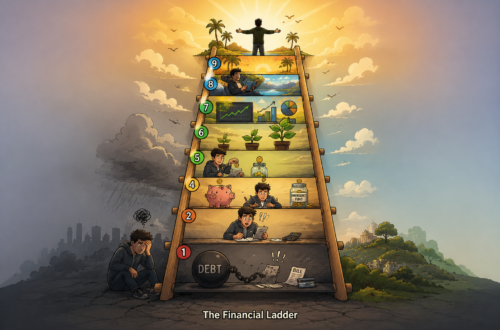
Every contribution, every reinvested dividend and every year you stay invested moves you another step higher on your Financial Ladder.
Growing a portfolio isn’t about finding the perfect investment or predicting tomorrow’s market. It is about building momentum, trusting a sensible strategy and giving your investments enough time to work. The habits you develop during this stage will influence every step that follows, bringing you steadily closer to financial independence.
If you’d like to dive deeper into portfolio growth, compound investing and the next steps on your journey, you’ll find the complete chapter in my upcoming book Step Up! – Climbing the Financial Ladder to Financial Independence.
Disclaimer
This article is for informational purposes only and does not constitute financial advice. Always consider your personal situation and consult a professional before making investment decisions.