Stock indexes are an essential tool for understanding how financial markets operate. They combine the performance of multiple companies into a single number, giving investors a snapshot of a market segment without having to track thousands of individual stocks. By following indexes, you can see trends, measure performance, and make informed decisions about your own investments.
This article is part of our Financial Basics series, where we explore the foundation of money management. Step by step, we explain how financial products work, why they matter, and how to use them wisely in everyday life.
What a Stock Index Is
A stock index tracks the performance of a selected group of companies and represents their combined value as a single number. Instead of examining each company separately, an index gives a broad overview of market trends. Some indexes focus on a specific country or region, while others track entire sectors or themes. For investors, indexes are useful both as benchmarks and as the basis for investment products like index funds and ETFs.
Global Stock Indexes
Two widely known global indexes are the MSCI World Index and the MSCI Emerging Markets Index. The MSCI World includes large- and mid-cap stocks from 23 developed countries, offering a broad view of global markets. The MSCI Emerging Markets Index, on the other hand, tracks companies in developing economies, giving investors exposure to regions with higher growth potential, though often with higher volatility.
U.S. Stock Indexes
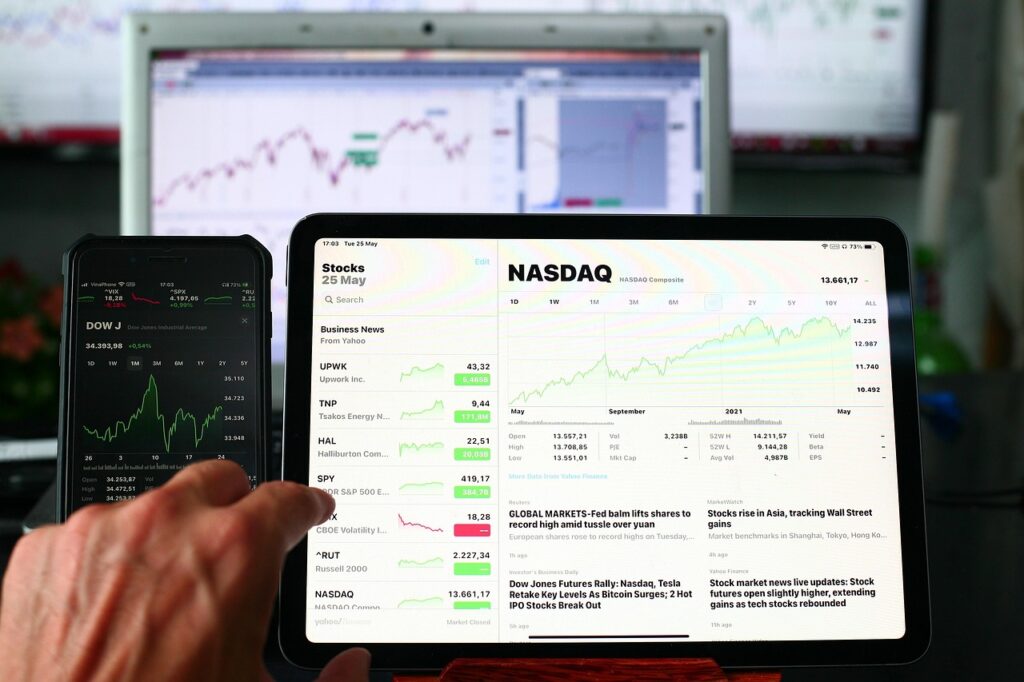
In the United States, several major indexes are commonly referenced. While S&P 500 represents 500 of the largest U.S. companies and is often used as a benchmark for overall market performance, the Dow Jones Industrial Average tracks 30 large industrial companies and is price-weighted, meaning that higher-priced stocks influence the index more. The NASDAQ Composite is heavily technology-focused, including thousands of companies, and is often cited when tech stocks experience significant movements. Each of these indexes reflects different aspects of the U.S. market and is calculated using slightly different methods, which affects how investors interpret them.
Other Important Indexes
In addition to global and U.S. indexes, there are also key regional benchmarks. In Europe, the FTSE 100 in the United Kingdom, the DAX in Germany, and the CAC 40 in France are widely followed. They track the performance of the largest companies in their respective countries and often serve as benchmarks for European markets. In Japan, the Nikkei 225 is the main index, covering 225 leading Japanese companies and providing a clear view of the domestic market. These regional indexes complement global benchmarks and help investors better understand market movements across different economic regions.
How Indexes Are Calculated
Not all indexes are calculated in the same way. Some are price-weighted, giving more influence to higher-priced stocks. Others are market-cap-weighted, where companies with larger total value impact the index more. There are also equal-weighted indexes, where each company has the same influence. These differences explain why movements in some stocks can affect an index more than others and why two indexes tracking similar companies can perform differently over time.
Why Stock Indexes Matter for Investors
Stock indexes are not just numbers on a screen. They are benchmarks that help investors measure the performance of their own portfolios. If your investments rise 5% in a year while the S&P 500 gains 10%, you can see that your portfolio underperformed the broader market. Indexes also form the foundation for investment products like ETFs and index funds, which allow investors to gain exposure to all companies in an index with a single purchase. For beginners and everyday investors, these products offer diversification, simplicity, and lower costs compared to actively picking individual stocks.
Market Sentiment and Indexes
Indexes also shape how people perceive the market. News headlines such as “the market is up today” almost always refer to movements in major indexes. These changes influence investor sentiment, helping to set expectations about economic conditions and market trends. By understanding indexes, investors can better interpret financial news and make informed decisions based on the bigger picture rather than reacting to individual stock fluctuations.
Limitations to Keep in Mind
While indexes are powerful tools, they have limitations. They do not include every stock in the market, and some are heavily influenced by a few very large companies. Market-cap-weighted indexes, in particular, may overrepresent the largest companies, while equal-weighted indexes may behave differently. Additionally, investing in an index does not eliminate risk. Market fluctuations still affect the value of index funds and ETFs.
Disclaimer
This article provides general educational information and does not constitute financial advice. Investments carry risks, including the potential loss of capital. Please consider your individual situation and seek professional advice before making financial decisions.